
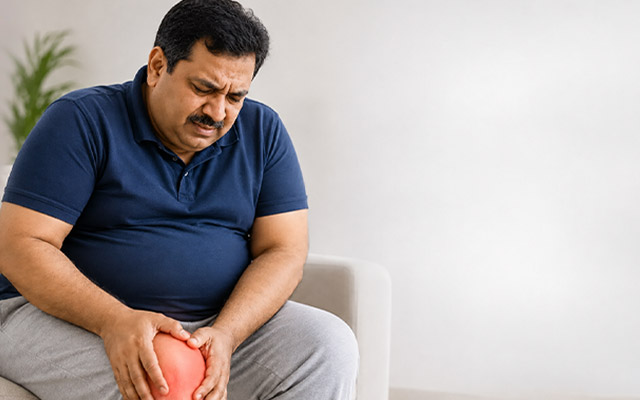
Excess weight significantly increases stress on knee joints, accelerating cartilage breakdown and intensifying arthritis pain.
Losing just 5-10% of body weight can substantially reduce knee pain and improve mobility. This relationship between weight and joint health is critical for overweight individuals.
Understanding how weight management helps for knee arthritis pain is essential for long-term joint health and function.
Key Takeaways:
- Each pound of body weight adds 4 pounds of pressure on knee joints
- Weight loss and knee pain relief are directly connected
- Combination of diet, low-impact exercise, and lifestyle changes yields best results
- Early intervention prevents progression to advanced arthritis
What Is the Connection Between Being Overweight and Knee Arthritis?
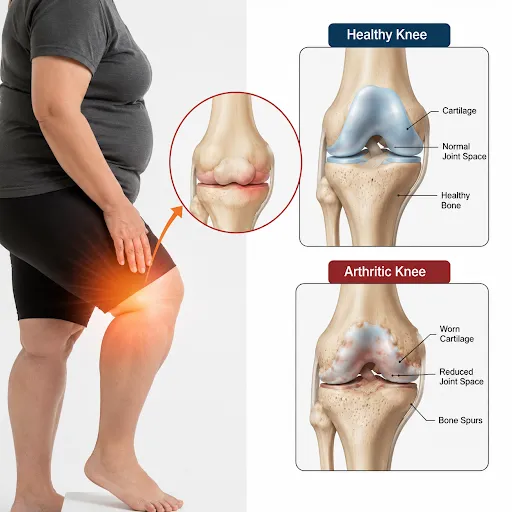
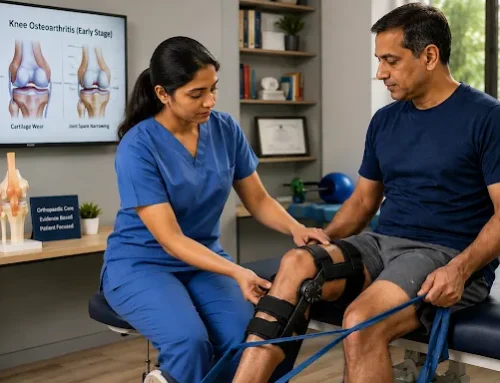
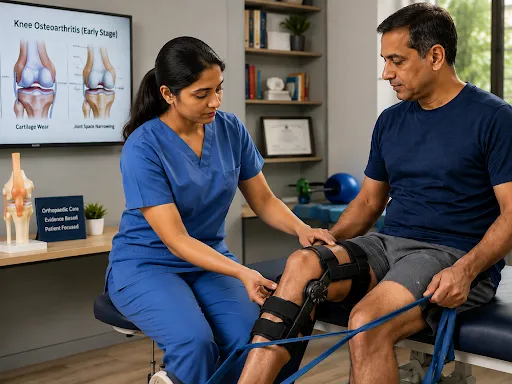
A well-established biomechanical principle indicates that the knee joint bears three to six times your body weight with each step. When you carry excess weight, the cumulative force accelerates cartilage degeneration, triggering osteoarthritis earlier and more severely.
Additionally, fat tissue produces inflammatory chemicals that worsen joint degradation. Obese individuals are significantly more likely to develop advanced knee disease compared to those maintaining healthy weight.
The knee comprises two bones meeting inside protective cartilage. This cartilage gradually wears under excessive load. Overweight individuals experience accelerated wear because their joints absorb greater impact forces daily.
Beyond mechanical stress, adipose tissue (fat) actively secretes pro-inflammatory cytokines that degrade cartilage biochemically. This dual mechanism—mechanical overload plus inflammatory signaling—makes obesity and knee osteoarthritis directly linked.
Research shows that weight management is a cornerstone non-surgical intervention for arthritis and an essential component of effective knee arthritis treatment.
How Does Excess Weight Affect Your Knee Joints?
How does weight affect knee joints through two distinct mechanisms: mechanical load and inflammatory response. Each pound of excess weight multiplies joint stress during movement, while fat tissue simultaneously triggers inflammatory processes that erode cartilage and accelerate degeneration. Together, these mechanisms rapidly progress knee arthritis severity.
The Mechanical Load Effect
Every step places 1.5x body weight through the knee; stairs or running create 3-6x load. A person 50 pounds overweight effectively adds 200-300 pounds of cumulative stress per step cycle.
This relentless pressure flattens cartilage, fragments the surface, and exposes underlying bone—the hallmark of advanced osteoarthritis.
The Inflammatory Effect
Fat tissue actively produces inflammatory markers (TNF-alpha, IL-6, leptin) that trigger cartilage-degrading enzymes. These chemicals persist systemically, damaging all joints.
Overweight individuals have elevated inflammatory markers even when arthritis isn’t clinically apparent, indicating early-stage joint damage progression.
How Much Does Losing Weight Actually Reduce Knee Pain?

Many ask: “ Does losing weight help knee arthritis?” Research shows: losing 10% to 15% of your body weight can reduce knee osteoarthritis pain by around 50%, improve mobility, and lower pressure on the knee joint.
Every pound of weight lost removes up to 4 pounds of force from the knee with each step, helping slow joint damage and making daily activities more comfortable.
- Reduces knee pain significantly
Losing about 10% of body weight reduced knee pain by nearly 50% over 18 months, comparable to the benefits of some pain-relieving medications.
- Decreases stress on the knee
Every 1 pound lost reduces the load on the knee by up to 4 pounds per step, easing strain during walking, climbing stairs, and other weight-bearing activities.
- Improves mobility and function
Weight loss enhances walking speed, balance, and overall joint function, with many patients experiencing an 18% or greater reduction in disability.
- Reduces inflammation naturally
Losing excess weight lowers inflammatory markers such as interleukin-6 (IL-6), helping decrease inflammation associated with knee osteoarthritis.
- Greater weight loss provides greater relief
People who lose 20% or more of their body weight experience an additional 25% reduction in knee pain compared with those who lose about 10%.
What Are the Warning Signs You Need to Manage Your Weight for Knee Health?
Watch for:
- Persistent knee pain during or after walking, stairs, or standing
- Morning stiffness lasting over 30 minutes
- Swelling or warmth around the knee
- Reduced range of motion or instability feeling
- Pain that worsens with weight-bearing activities
- Difficulty rising from chairs or climbing stairs
These signs indicate cartilage loss is already occurring. Addressing weight at this stage can halt progression; delaying risks requiring surgical intervention later.
What Is the Best Diet for Knee Arthritis When You’re Overweight?
Diet for knee arthritis should prioritise anti-inflammatory foods while creating a caloric deficit for sustainable weight loss. Evidence supports Mediterranean, DASH (Dietary Approaches to Stop Hypertension), and plant-forward eating patterns.
Key dietary principles:
- Omega-3 rich foods (fatty fish, flaxseeds, walnuts) reduce inflammatory markers
- Antioxidant-rich vegetables and fruits (berries, leafy greens, peppers) protect cartilage
- Limit processed foods, refined sugars, and trans fats—these increase inflammation
- Adequate protein (1.2g per kg body weight) maintains muscle supporting the knee
- Stay hydrated; water lubricates cartilage and aids nutrient transport
Sustainable 1-2 pound weekly weight loss through balanced nutrition outperforms rapid weight loss that causes muscle loss and joint instability.
What Types of Exercise Are Safe for Overweight Individuals with Knee Arthritis?
Best exercise for knee arthritis if overweight focuses on low-impact movement that strengthens surrounding muscles without jarring the joint. The goal is building strength and mobility while gradually increasing weight-bearing capacity.
Low-Impact Exercises to Try
- Swimming/water aerobics: Water’s buoyancy eliminates 50-90% of body weight, allowing full-range motion without joint stress.
- Stationary cycling: Controlled movement, adjustable resistance, no impact. Builds quadriceps strength that stabilises the knee.
- Elliptical machine: Smoother than running; weight remains partially supported.
- Tai Chi: Gentle, controlled movements improve balance and proprioception while building functional strength.
- Walking: Short, frequent walks on flat terrain. Is walking good for knee arthritis? Yes, when done correctly—start with 10-15 minutes daily, gradually increasing duration. Walking strengthens muscles, burns calories, and improves cardiovascular health without excessive joint stress.
Exercises to Avoid
- Running, jogging, jumping, or sprinting (excessive impact)
- Heavy squats or lunges (concentrates stress on knee)
- High-impact aerobics (jumping, landing)
- Rapid directional changes (basketball, soccer)
Resistance training for muscles around the knee must be progressive and controlled.
What Other Lifestyle Changes Help Manage Knee Arthritis Pain?
Beyond diet and exercise, optimise these factors:
Sleep: Quality sleep (7-9 hours) reduces inflammation and supports recovery. Poor sleep elevates inflammatory markers and worsens pain perception.
Posture: Improper sitting and standing mechanics strain the knee. Maintain neutral spine alignment; avoid prolonged static positions.
Footwear: Supportive shoes with cushioning absorb impact. Avoid heels over 1 inch; they alter biomechanics and increase knee stress.
Hydration: Adequate water intake maintains cartilage hydration. Aim for 8+ glasses daily.
Stress management: Chronic stress elevates inflammatory markers. Meditation, deep breathing, or yoga reduce stress while improving mobility.
When Should You See a Doctor About Knee Arthritis and Weight?

Seek evaluation if:
- Pain persists beyond 2-3 weeks despite rest and over-the-counter medication
- Swelling prevents normal movement
- Knee gives way or feels unstable
- Pain significantly limits daily activities despite lifestyle changes
- Symptoms progress despite weight loss efforts
A doctor can assess cartilage damage and rule out other conditions, even treatment for fractures, through imaging before recommending the appropriate treatment. Early evaluation prevents irreversible damage.
H2: How Can Dr Prashant Arya Help You Manage Knee Arthritis and Weight?
Knee pain overweight treatment begins with an accurate diagnosis and a personalised care plan.
Dr Prashant Arya, in Jamshedpur evaluates the severity of knee arthritis and recommends the most suitable treatment, including weight management, physiotherapy, medications, injections, or surgery when required.
Learn more about Dr. Prashant Arya’s profile and experience or book a consultation with Dr. Prashant Arya for expert orthopaedic care.
People also Ask
Does losing weight really help with knee arthritis pain?
Yes. Even 5-10% weight loss reduces pain by 20-50% and slows disease progression. Weight reduction decreases joint load and inflammatory markers that damage cartilage.
How much weight do I need to lose to see a difference in knee pain?
Many patients notice pain reduction after losing 10-15 pounds (5-10% of body weight). Changes typically become apparent within 8-12 weeks of consistent effort.
Can knee arthritis be reversed through weight loss?
No, cartilage damage cannot be reversed. However, weight loss halts progression, reduces pain, and can restore function in early-stage arthritis. Advanced cases may still require surgery.
What is the best exercise for knee arthritis if I’m overweight?
Swimming, cycling, and walking are optimal. They build strength without excessive joint stress. Start gradually and increase duration progressively.
Is walking good for knee arthritis, or should I avoid it?
Walking is beneficial when performed correctly on flat terrain at a comfortable pace. Short, frequent walks are preferable to long sessions initially.
What foods should I avoid if I have knee arthritis?
Avoid processed foods, refined sugars, trans fats, and excess sodium. These increase inflammation and impair weight loss.
Can being overweight cause knee arthritis at a young age?
Yes. Excessive weight accelerates cartilage wear at any age. Young overweight individuals can develop osteoarthritis decades earlier than peers at healthy weight.
How long does it take to feel pain relief after losing weight?
Most people notice improvement within 8-12 weeks of consistent weight loss and exercise. Substantial improvement typically occurs at 3-6 months.
Should I consult an orthopaedic doctor or a dietitian first?
Both are valuable. An orthopedic doctor assesses joint damage and prescribes appropriate therapy; a dietitian designs a sustainable nutrition plan. Coordinated care optimises outcomes.
Will I still need knee replacement surgery if I lose weight?
Weight loss often eliminates or delays surgery needed in early-moderate arthritis. Advanced cartilage loss may still require surgery regardless of weight management, but weight loss improves surgical outcomes and recovery.
Final Thoughts
Weight loss and knee pain are closely connected. Losing excess weight reduces pressure on the knees, eases inflammation, improves mobility, and can slow the progression of knee arthritis. While existing cartilage damage cannot be reversed, early treatment can help preserve joint function and delay or even avoid surgery.
Ready to take control of your knee health? Consult Dr Prashant Arya, an orthopaedic doctor offering personalised arthritis treatment for patients in Jamshedpur.