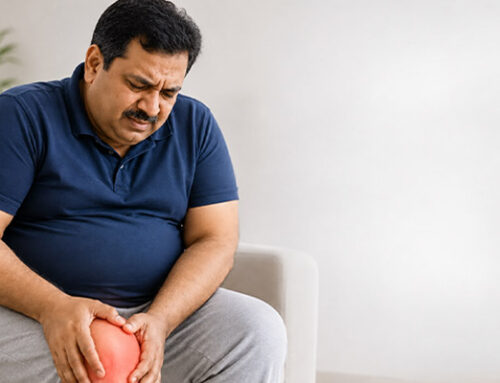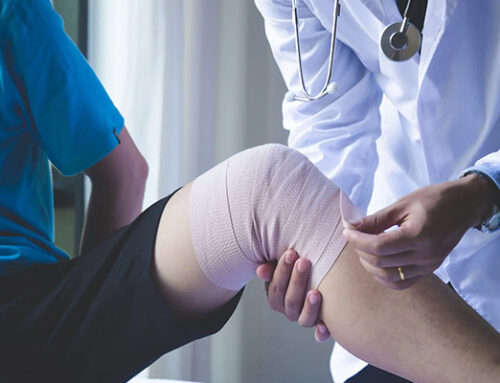

Knee pain from early-stage arthritis does not always mean surgery is the next step. Many people can reduce pain, improve movement, and stay active through the right combination of knee braces, physiotherapy, weight management, and lifestyle changes.
The key is starting treatment before cartilage damage becomes advanced.
What Happens in Early-Stage Knee Osteoarthritis?
In Stages 1 and 2, the smooth cartilage cushioning the joint develops microscopic wear or mild thinning, which may cause early stiffness, discomfort, or reduced joint flexibility.
Early arthritis treatment from an orthopaedic doctor can slow progression and improve long-term knee function.
Knee Cartilage Decay Symptoms
Cartilage itself has no nerves, so its deterioration does not necessarily cause pain directly. Symptoms develop from changes throughout the joint and surrounding tissues.
Common knee cartilage decay symptoms include:
- Pain while climbing stairs or standing after sitting
- Morning stiffness lasting a few minutes
- Swelling around the knee after activity
- Clicking or grinding sensations during movement
- Reduced ability to squat or kneel comfortably
These symptoms usually worsen gradually rather than appearing suddenly, which is why early assessment is important.
If you’re unsure whether your pain is due to cartilage wear or a torn ligament, read Cartilage Damage vs. Ligament Injury.
Why Early Diagnosis Changes Treatment Options
Early diagnosis allows doctors to start targeted treatment before permanent joint damage and significant cartilage loss occur.
Here’s a Quick View:
| Early diagnosis | Delayed diagnosis |
| More non-surgical treatment options | Limited conservative choices |
| Better muscle preservation | Progressive muscle weakness |
| Improved mobility and balance | Reduced daily function |
| May delay surgical intervention | Higher risk of advanced arthritis |
Supervised exercise and muscle strengthening can reduce pain and improve function in early knee osteoarthritis by stabilising the joint, promoting synovial fluid circulation, and reducing local inflammation. [Source]
Starting treatment early often helps patients remain active and postpone more invasive procedures.
Do Knee Braces Really Work for Arthritis?
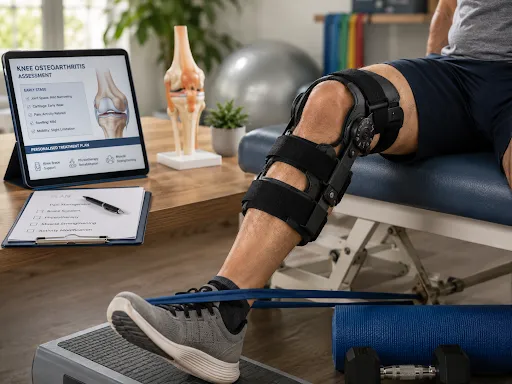
Yes. As per a [source], these braces can stabilise the knee, improve mobility, shift pressure away from damaged cartilage, and reduce swelling.
Knee Brace Types for Arthritis
| Type of Brace | Best For |
| Unloader Brace | Pain affecting one side of the knee joint; shifts pressure toward the healthier side |
| Hinged Brace | Moderate-to-severe symptoms with joint instability; supports side-to-side movement and limits excess motion |
| Compression Sleeve | Mild symptoms, swelling and general knee aches; provides gentle compression and warmth |
| Wraparound / Patellofemoral Brace | Front-of-knee pain; helps guide and support kneecap movement |
What Braces Can and Can’t Do — Setting Realistic Expectations
A knee brace can:
- Reduce pain during walking and standing
- Improve confidence and joint stability
- Support better movement during daily activities
- Complement physiotherapy and strengthening exercises
A knee brace cannot:
- Regrow damaged cartilage
- Slow disease progression and protect joint function.
- Replace exercise or weight management
- Eliminate the need for medical evaluation
Persistent instability may indicate a condition requiring knee ligament injury treatment rather than care alone.
The Role of Physiotherapy in Early Arthritis Management
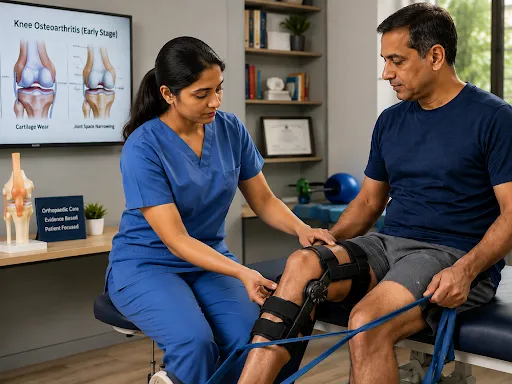
Physiotherapy can reduce pain and improve joint function in the early stages through targeted exercises, movement education, and other non-medical therapies.
Exercises for Early Arthritis Knee
A structured exercise programme should be gradual and supervised, especially during painful flare-ups.
Common exercises include:
- Quadriceps strengthening
- Straight leg raises
- Hamstring stretches
- Glute strengthening exercises
- Low-impact cycling or swimming
These exercises improve joint support without placing excessive stress on the knee.
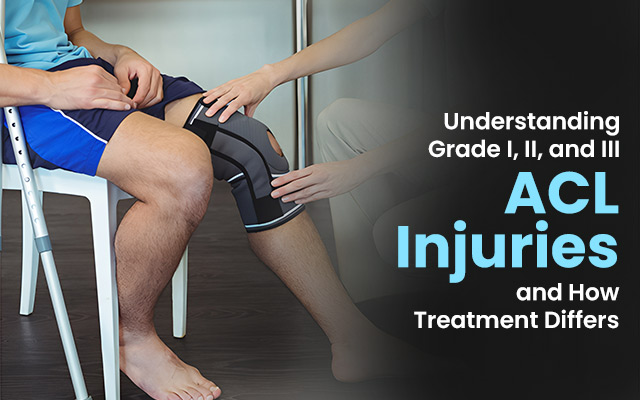
Learn how rehabilitation changes across injury severity in Understanding Grade I, II, and III ACL Injuries.
Strengthening vs. Pain Management Goals
Physiotherapy has two equally important objectives: controlling symptoms today and protecting the knee for the future.
| Strengthening goals | Pain management goals |
| Build muscle support around the knee | Reduce stiffness and inflammation |
| Improve balance and stability | Improve walking comfort |
| Protect remaining cartilage | Increase daily mobility |
| Enhance long-term joint function | Make everyday activities less painful |
When combined with the right brace and lifestyle changes, physiotherapy often allows patients to stay active while delaying more invasive treatment options.
Combining Braces and Physiotherapy — Is It Enough?
Combining a properly fitted knee brace with structured physiotherapy can reduce joint stress, strengthen supporting muscles, and improve mobility. However, results vary, and worsening symptoms may require additional treatment.
Together, they can improve mobility more effectively than either approach alone.
A typical conservative treatment plan includes:
- Wearing a brace during longer periods of walking or standing
- Supervised strengthening exercises 2–3 times per week
- Daily flexibility and range-of-motion exercises
- Weight management to reduce pressure on the knee
- Regular follow-up to monitor symptoms and progress
While this approach helps many patients remain active, it cannot reverse cartilage loss. The goal is to improve function and delay disease progression.
When Conservative Treatment Isn’t Enough
Conservative treatment may no longer be enough when pain and joint damage significantly restrict daily activities and symptoms fail to improve after 3 to 6 months of non-surgical care.
Warning Signs Your Arthritis Is Progressing
- Knee pain even while resting
- Frequent swelling after minimal activity
- Difficulty walking short distances
- Stiffness lasting longer each morning
- The knee repeatedly giving way or feeling unstable
These symptoms suggest that the joint is losing function and should not be ignored.
When Is Knee Replacement Necessary
Surgery is usually considered only after non-surgical treatments no longer provide adequate relief and imaging confirms significant joint damage.
| Conservative care may continue | Surgical assessment may be needed |
| Mild to moderate pain | Persistent severe pain |
| Daily activities remain manageable | Walking and climbing stairs become difficult |
| Improvement with physiotherapy | Little or no improvement after rehabilitation |
| Occasional use of pain medication | Pain affects sleep and quality of life |
The decision is based on symptoms, examination findings, X-rays, and your overall lifestyle, not age alone.
Read Surgeon Explains If Total Knee Replacement Is Right for You to understand when surgery becomes appropriate.
Managing Arthritis Pain Without Surgery — A Realistic Long-Term Plan
Without surgery, pain management often involves physical activity, lifestyle changes, and targeted therapies that ease symptoms, improve movement, and help protect joint function.
A realistic plan includes:
- Daily movement: Walk, swim or cycle to maintain flexibility and ease stiffness.
- Muscle strengthening: Build knee support with light weights or resistance bands.
- Stretching: Stretch in the morning and evening to maintain mobility.
- Healthy weight: Reduce excess pressure on the knees, hips and spine.
- Balanced diet: Include berries, fish, leafy greens and nuts.
- Adequate hydration: Drink enough water to support joint tissues.
- Hot/cold therapy: Use ice for swelling and heat for stiffness.
- Guided exercise: Follow a personalised routine suited to your condition.
- Supportive aids: Consider braces, shoe inserts or canes when needed.
Arthritis can sometimes develop after major joint trauma, making timely knee fracture treatment important for long-term knee health.
What to Expect During Your First Consultation?
- Symptom discussion: The doctor asks about your pain, stiffness, affected areas, and how symptoms affect daily activities.
- Medical history: Your previous injuries, treatments, surgeries, and current medications are reviewed.
- Joint examination: The doctor checks for swelling, tenderness, stiffness, and restricted movement.
- Movement assessment: The doctor may assess your joint flexibility, strength, posture, and walking.
- Diagnostic tests: X-rays, MRI, ultrasound, or blood tests may be recommended when necessary.
- Treatment discussion: The doctor explains the findings and discusses appropriate treatment options.
Conclusion — Conservative Care Has Real Value, With Realistic Limits
Knee braces and exercise-based therapy can reduce pain, improve stability, support mobility, and help protect joint function when started early and followed consistently.
If symptoms continue to worsen despite rehabilitation, book a consultation with Dr Prashant Arya, an experienced arthritis treatment doctor in Jamshedpur, before ongoing joint damage begins to affect your everyday life.
Explore all treatments for knee, joint, and sports injury care.
People Also Ask
Can knee braces alone stop arthritis from getting worse?
No. Knee braces reduce pressure and improve stability, but they do not prevent cartilage degeneration. They work best alongside physical therapy and lifestyle changes.
How long should I try physiotherapy before considering other treatment options?
Most patients are assessed after 6–12 weeks of consistent exercise-based therapy. Progress depends on improvements in symptoms, strength, mobility, and daily function.
Are knee braces suitable for all types of arthritis?
No. Different braces suit different conditions and stages of arthritis. An assessment helps determine the most suitable option for your knee.
What exercises should I avoid if I have early-stage knee arthritis?
Avoid high-impact activities such as jumping, deep squats, and repetitive running during painful flare-ups. Low-impact strengthening is generally safer.
How do I know if it’s time to move from conservative treatment to surgery?
Persistent pain, difficulty walking, loss of mobility, and poor improvement despite rehabilitation may indicate the need for a surgical evaluation.