
Frozen Shoulder Treatment Doctor in Jamshedpur
Home / Treatments / Shoulder / Frozen Shoulder
Top orthopaedic doctor for treating frozen shoulder pain
12,000+ patients treated across orthopaedic care
14+ years of orthopaedic surgical experience
MS Orthopaedic, Gold Medalist
Fellowship in Arthroscopy and Sports Surgery
- Red Cross Bhawan, Pipe Line Road, near Old Court Road, Ambagan, Sakchi, Jamshedpur, Jharkhand 831001
Orthopaedic Treatments

What Is Frozen Shoulder?
Medically known as adhesive capsulitis, it causes shoulder pain, stiffness, and a severe loss of movement in the shoulder joint.
Key Points To Know
| Factor | Details |
|---|---|
| Exact Cause | Often unclear, but inflammation and scarring of the shoulder capsule are involved. |
| Immobilisation | Risk increases after keeping the arm still for a prolonged period following a fracture, surgery or stroke. |
| Health Conditions | More common in people with diabetes, thyroid disorders or Parkinson’s disease. |
| Demographics | Most often affects adults aged 40–60, particularly women. |
Planning for Treatment? Get More Insights!
Does Frozen Shoulder Always Require Surgery?
No. Most cases improve with medicines, guided exercises and physiotherapy.
Is Frozen Shoulder the Same as Arthritis?
No. One involves capsule tightening; the other affects cartilage and joint surfaces.
Can Frozen Shoulder Go Away on Its Own?
Yes. Recovery is gradual and often takes several months or longer.
Does Moving the Shoulder Make Frozen Shoulder Worse?
No. Gentle movement helps maintain flexibility; forceful stretching can aggravate symptoms.
Can Frozen Shoulder Affect the Other Shoulder?
Yes. The opposite side may become affected months or years later.
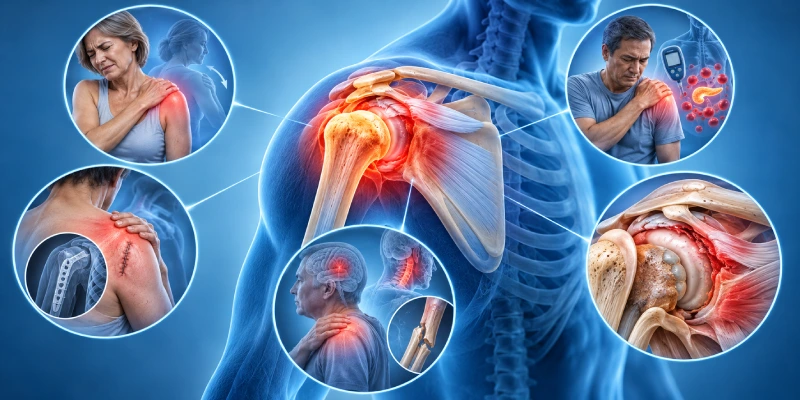
Types of Frozen Shoulders
Primary (Idiopathic)
Develops gradually without an identifiable cause and commonly affects adults aged 40 to 60.
Secondary
Occurs due to an identifiable condition, injury, surgery, or other triggering event.
Systemic (Secondary)
Associated with diabetes and metabolic conditions that can affect shoulder tissue health.
Extrinsic (Extra-Articular)
Linked to conditions outside the shoulder, including stroke, neck disorders, or fractures.
Intrinsic (Intra-Articular)
Results from problems within the joint, including rotator cuff disorders, tendinopathy, or arthritis.
You May Need Frozen Shoulder Treatment if You Have
- Progressive pain
- Increasing stiffness
- Difficulty with daily tasks
- Night pain
- Reduced range of motion
- Difficulty reaching overhead
- Trouble dressing or grooming
- Difficulty reaching behind your back
- Trouble with household or work activities
- Symptoms persisting despite home measures
- Reduced everyday independence

What Can Happen if Frozen Shoulder Is Not Properly Treated?
Chronic shoulder pain
Prolonged movement restriction
Persistent mobility deficits
Muscle weakness and atrophy
Compensatory injuries
Work and recreational difficulties
Overreliance on the unaffected arm
Sleep disturbance
Diagnostic Tests Before Frozen Shoulder Treatment
- Clinical Examination
- X-rays
- Ultrasound & MRI
- Blood Glucose
- Hemoglobin A1c
- TSH
- Medical History
- Functional Assessment
Types of Frozen Shoulder Treatment
Non-Surgical Treatments
- Physical Therapy
- Medications
- Corticosteroid Injections
- Hydrodilatation
Surgical and Procedural Treatments
- Manipulation Under Anaesthesia (MUA)
- Arthroscopic Capsular Release
Step-by-Step Procedure of Frozen Shoulder (Adhesive Capsulitis) Treatment
-
Step 1: Pain Relief and Inflammation Control
Modify activities, take prescribed pain medication, and apply heat before stretching exercises.
-
Step 2: Gentle Home Exercises and Physiotherapy
Perform pendulum swings, wall walks, and cross-body stretches with professional physiotherapy guidance.
-
Step 3: Medical and Interventional Procedures
Corticosteroid injections reduce inflammation, while hydrodilatation stretches the contracted shoulder joint capsule.
-
Step 4: Surgical and Advanced Options
Manipulation under anaesthesia loosens adhesions; arthroscopy removes restrictive scar tissue when conservative treatment fails.
Risks & Safety Measures to Follow After Frozen Shoulder Treatment
Risks
- Recurrent shoulder stiffness
- Medication-related stomach or kidney problems
- Temporary injection-site soreness
- Skin thinning after steroid injections
- Temporary blood sugar elevation
- Procedure-related bleeding
- Procedure-related infection
- Temporary nerve irritation
- Rotator cuff injury
- Incomplete symptom relief
- Further treatment may become necessary
Safety Tips
- Stop exercises causing sharp pain
- Avoid heavy or repetitive lifting
- Maintain proper shoulder posture
- Control underlying health conditions
- Follow exercises consistently
- Avoid prolonged shoulder immobilisation
- Gradually increase activity
- Follow post-injection instructions
- Attend scheduled physiotherapy
- Complete follow-up appointments
- Report worsening symptoms promptly
Recovery Timeline After Frozen Shoulder Treatment
-
Freezing Stage: 2–9 Months
Pain gradually increases while shoulder movement decreases, often causing significant nighttime discomfort.
-
Frozen Stage: 4–12 Months
Pain begins easing, but increasing stiffness makes everyday shoulder movements increasingly difficult.
-
Thawing Stage: 6 Months–2 Years
Shoulder mobility gradually improves as pain decreases and normal function progressively returns.
From Pain to Progress: Real Success Stories
What Factors Determine Pricing for Frozen Shoulder Treatment?
- Treatment type
- Imaging guidance
- Hospital or clinic
- Doctor’s expertise
- Rehabilitation needs
- Severity and duration of stiffness
- Diagnostic investigations
- Injection requirement
- Anaesthesia requirements
- Follow-up consultations
Non-Surgical vs Surgical Frozen Shoulder Treatment: Cost Factors
| Cost Factor | Non-Surgical | Surgical |
|---|---|---|
| Treatment | Generally lower upfront cost | Generally higher upfront cost |
| Therapy | May require multiple sessions | Post-operative therapy is usually required |
| Injections | May involve injection-related costs | Usually not a primary cost factor |
| Hospital costs | Usually minimal | Includes hospital and operating-room costs |
| Anaesthesia | Usually not required | May be required for certain procedures |
| Equipment | Basic treatment equipment | Specialised surgical equipment |
| Doctor’s fees | Consultation and treatment fees | Surgeon and procedure-related fees |
| Recovery | Can increase with prolonged therapy | Includes rehabilitation and follow-up care |
Frequently Asked Questions
Can a bad sleeping position cause frozen shoulder?
No. An awkward sleeping posture may temporarily cause soreness or restricted movement, but it does not usually create the capsule tightening responsible for this condition.
Is frozen shoulder the same as a rotator cuff tear?
No. A rotator cuff tear involves damaged tendons, while this condition mainly affects the joint capsule and causes progressive stiffness and restricted movement.
Does frozen shoulder only occur after an injury?
No. It may develop without a clear injury. Diabetes, prolonged immobilisation, thyroid disorders, and certain medical conditions can increase the likelihood.
Is frozen shoulder caused by stress or anxiety?
No. Stress may increase muscle tension and make discomfort feel worse, but it is not considered a direct cause of capsule tightness.
Can frozen shoulder return in the same shoulder?
Yes. Recurrence in the same shoulder is uncommon but possible. Persistent risk factors, incomplete recovery, or another underlying condition may increase the likelihood of symptoms returning.
Can young adults develop frozen shoulder?
Yes. Although it is more common in middle age, younger adults can develop it, particularly when it is associated with injury, immobilisation, or certain medical conditions.
Is diabetes the only medical condition linked to frozen shoulder?
No. Thyroid disorders, prolonged immobilisation, previous shoulder problems, and some neurological conditions are also associated with a greater likelihood of developing this condition.
Does less pain mean the shoulder is fully healed?
No. Discomfort may reduce while stiffness remains. Judge improvement by movement, strength, and daily function rather than pain levels alone.
Can painkillers cure frozen shoulder?
No. They can reduce discomfort and make movement easier but do not reverse capsule tightening. Recovery usually requires appropriate movement, exercises, and sometimes additional treatment.
Can steroid injections permanently cure frozen shoulder?
No. They may provide significant short-term relief and improve movement, particularly during painful stages, but they do not guarantee permanent resolution or prevent recurrence.