
ACL & Ligament Injury Doctor in Jamshedpur
Home / Treatments / Knee / ACL & Ligament Injury
Personalised ACL reconstruction & ligament injury care
12,000+ patients treated across orthopaedic care
14+ years of orthopaedic surgical experience
MS Orthopaedic, Gold Medalist
Fellowship in Arthroscopy and Sports Surgery
- Red Cross Bhawan, Pipe Line Road, near Old Court Road, Ambagan, Sakchi, Jamshedpur, Jharkhand 831001
Orthopaedic Treatments

What Is an ACL Injury?
It is the stretching or tearing of the Anterior cruciate ligament in the knee, which connects the thigh bone to the shin bone.
Key Points To Know
| Term | Details |
|---|---|
| Anterior | Located toward the front of the knee. |
| Cruciate | Arranged in a crossed shape, forming an “X” with the posterior cruciate ligament. |
| Ligament | A strong band of fibrous tissue that connects bones and helps stabilise a joint. |
Planning For Treatment? Know These First
Is ACL injury only caused by sports?
No. Falls, collisions, awkward landings, and sudden twists can cause injuries.
Is an ACL tear always treated with surgery?
No. Treatment depends on severity, stability, activity demands, and associated injuries.
How long does ACL injury recovery actually take?
Usually several months. Recovery varies according to treatment, rehabilitation, and individual healing.
Will the knee feel normal after ligament treatment?
Often, yes. Proper treatment and rehabilitation can restore strength, stability, and function.
Is ACL surgery really necessary for everyone?
No. Surgery depends on instability, activity level, associated damage, and symptoms.
Types of ACL Injuries
Partial Tear
Some ligament fibres are damaged, while remaining fibres maintain partial stability.
Complete Tear
The ligament completely ruptures, causing significant instability during movement and weight-bearing.
Contact Injury
A direct blow forces the knee beyond its normal protective limits.
Non-Contact Injury
Sudden pivoting, deceleration, or awkward landing causes ligament failure without impact.
Tibial Spine Avulsion
The ligament pulls away a small piece of bone at the attachment site.
Combined Knee Injury
ACL damage occurs alongside meniscus, cartilage, or other ligament injuries.
Grades of ACL Injuries
| Grades | Description |
|---|---|
| I | Ligament is stretched but remains intact, causing minimal instability. |
| II | Ligament is partially torn, causing increased looseness and instability. |
| III | Ligament completely tears, resulting in significant knee instability. |
You May Need ACL Injury Treatment if You Have
- Loud popping sound during knee injury
- Rapid swelling within several hours
- Knee instability during walking or movement
- Difficulty fully bending or straightening
- Sharp pain during walking or turning
- Discomfort while using stairs or slopes
- Persistent pain following a twisting injury
- Difficulty bearing weight on the leg
- Trouble changing direction or pivoting
- Repeated episodes of knee instability
- Difficulty returning to sports or activities
Complications if ACL Injury Is Not Treated?
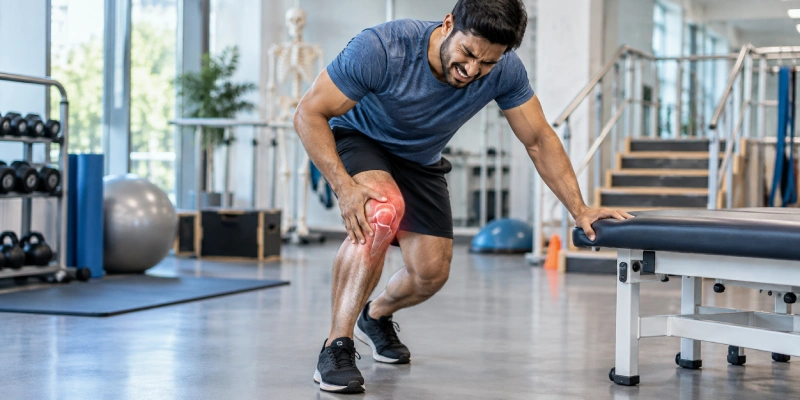
Chronic knee instability and giving way
Secondary meniscus tears and damage
Progressive cartilage wear and degeneration
Early-onset knee osteoarthritis
Quadriceps weakness and muscle wasting
Reduced physical activity over time
Greater risk of additional knee injuries
Increasing movement limitations
Diagnostic Tests Before ACL Injury Treatment
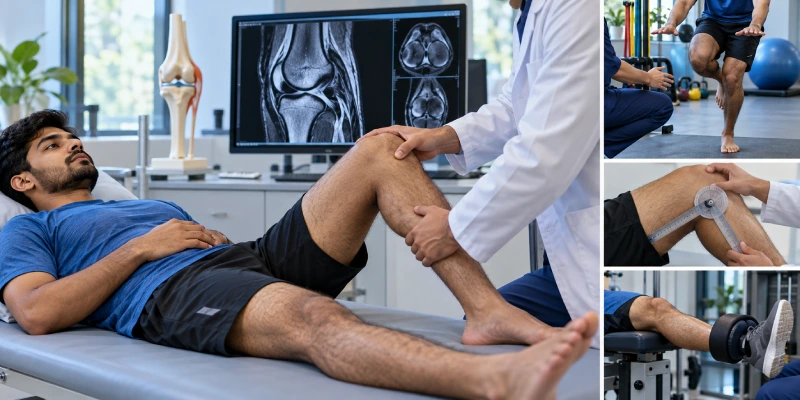
- Lachman Test
- Pivot-Shift Test
- Anterior Drawer Test
- Magnetic Resonance Imaging (MRI)
- X-rays
- CT Scan When Required
- Knee Range-Of-Motion Assessment
- Ligament Stability Testing
- Muscle Strength Assessment
- Assessment For Associated Knee Injuries
Types of ACL Injury Treatment
Non-Surgical Treatment
- Physical therapy: Restores motion and strengthens muscles supporting the knee.
- Bracing: Supports the joint and limits unwanted movement.
- Activity modification: Avoids pivoting, jumping, and high-impact activities.
- RICE and medications: Help control pain, swelling, and inflammation.
Surgical Treatment
- Reconstruction: Replaces the damaged ligament using a tendon graft.
- Repair: Reattaches the injured ligament in selected cases.
- BEAR implant: Supports natural healing between the torn ligament ends.
ACL & Ligament Treatment Options at a Glance
| Non-surgical | Surgical |
|---|---|
| Physical therapy and bracing | Reconstruction |
| Activity modification | Repair |
| RICE and medications | BEAR implant |
Step-by-Step Procedure of ACL Injury Surgical Treatment
-
Anesthesia
Anaesthesia keeps you comfortable throughout the procedure.
-
Graft harvest
A tendon graft is obtained from your body or a donor.
-
Diagnostic arthroscopy
A small camera examines the joint and identifies associated internal damage.
-
Debridement
Surgeons remove damaged ligament remnants to create a clear surgical field.
-
Tunnel drilling
Precise tunnels are created through the thighbone and shinbone.
-
Graft placement and fixation
The surgeon positions the prepared graft and anchors it securely inside the bone tunnels.
-
Closure and dressing
The surgeon closes the incisions, assesses the knee, and applies a sterile dressing.
Risks & Safety Measures to Follow After ACL Treatment
Risks
- Graft failure or re-tear
- Arthrofibrosis and knee stiffness
- Deep vein thrombosis (DVT)
- Infection
- Persistent quadriceps and hamstring weakness
- Nerve or blood vessel injury
Safety Measures
- Avoid twisting and pivoting movements
- Avoid deep squats during early recovery
- Follow prescribed weight-bearing restrictions
- Use crutches and braces as instructed
- Elevate the leg with ankle support
- Keep wounds clean and take prescribed medicines
Recovery Timeline After ACL Treatment
-
Weeks 0–2
Focus on controlling swelling, using crutches, and restoring full knee extension.
-
Weeks 2–6
Gradually restore mobility, reduce crutch dependence, and activate supporting muscles.
-
Weeks 6–12
Build leg strength, improve balance, and progress toward normal walking.
-
Months 3–6
Introduce jogging, agility drills, and progressively challenging strengthening exercises.
-
Months 6–12
Progress through sport-specific training, functional testing, and medical clearance.
From Pain to Progress: Real Success Stories
What Factors Determine Pricing for ACL & Ligament Injury Treatment
- Type and severity of ligament injury
- Treatment or reconstruction technique
- Graft selection
- Surgeon’s professional and surgical fees
- Hospital tier and location
- Hospital and operating-room charges
- Associated knee injuries
- Pre-surgery tests and medical evaluation
- Hospital stay and post-operative care
- Post-surgery rehabilitation
- Physiotherapy and rehabilitation requirements
ACL Surgical vs Non-Surgical Treatment: Cost Factors
| Cost Component | Surgical | Non-Surgical |
|---|---|---|
| Primary Expense | Implants, operating theatre, surgeon fee | Physical therapy sessions |
| Rehab Duration | 6 to 12 months | 3 to 6 months |
| Graft Selection | Autograft or allograft costs vary | Not applicable |
| Associated Injuries | Meniscus or cartilage treatment may increase costs | Additional rehabilitation may be required |
| Hospital Charges | Facility, anaesthesia, operating-room and room charges | Usually limited to outpatient visits |
| Pre-Treatment Evaluation | Imaging, blood tests and medical assessment | Clinical assessment and imaging when required |
| Bracing / Support | Post-operative brace may be required | Functional or custom knee brace may add costs |
| Hidden / Long-Term Risk | Implant-related complications or additional procedures | Persistent instability may eventually require reconstruction |
| Potential Additional Cost | Hospital stay, medicines and follow-up consultations | Extended physiotherapy and delayed surgery, if required |
Frequently Asked Questions
Can you walk normally with a completely torn ACL?
Yes. Walking may remain possible, especially on straight surfaces, even when the ligament is completely torn. Instability often becomes more noticeable when you turn, pivot, or move suddenly.
Can you have an ACL tear without severe knee pain?
Yes. Pain intensity varies between people. Some experience substantial discomfort initially, while others feel relatively little pain after swelling settles, despite having significant internal damage.
Does an ACL tear always cause a popping sound?
No. Some people notice a distinct pop when the injury occurs, but others do not. The absence of this sensation does not rule out significant ligament damage.
Can an ACL tear be diagnosed without an MRI?
Yes. A clinical examination can provide strong evidence through tests that assess stability and movement. Imaging may then help confirm the injury or identify associated damage.
Can an ACL tear increase the risk of knee arthritis?
Yes. Previous ligament damage can contribute to later degenerative changes, particularly when instability or additional injuries affect normal joint mechanics over time.
Can an ACL graft tear again after reconstruction?
Yes. Re-injury remains possible, particularly after returning to demanding activities. Strength, movement control, rehabilitation quality, and gradual progression all influence long-term stability.
Can an ACL injury damage the meniscus too?
Yes. Meniscal injuries can occur alongside ligament damage, especially after twisting or high-force movements. Identifying both problems is important when planning appropriate treatment and rehabilitation.
Do ACL reconstruction screws need to be removed later?
No. Fixation devices are generally designed to remain in place unless they cause a specific problem, such as irritation, infection, or another clinically significant complication.
Can delaying ACL treatment cause more knee damage?
Yes. Persistent instability may place additional stress on structures within the joint, potentially contributing to further meniscal or cartilage damage during repeated giving-way episodes.
Can you return to sports based only on how your knee feels?
No. Readiness should also consider strength, balance, movement control, functional testing, and sport-specific performance, not just symptoms or confidence.