
Hemi (Partial) Hip Replacement Surgeon In Jamshedpur
Home / Treatments / Hip / Hemi (Partial) Hip Replacement
Trusted orthopaedic surgeon for advanced hemi hip replacement
12,000+ patients treated across orthopaedic care
14+ years of orthopaedic surgical experience
MS Orthopaedic, Gold Medalist
Fellowship in Arthroscopy and Sports Surgery
- Red Cross Bhawan, Pipe Line Road, near Old Court Road, Ambagan, Sakchi, Jamshedpur, Jharkhand 831001
Orthopaedic Treatments

What Is Hemi (Partial) Hip Replacement?
Also known as hip hemiarthroplasty, it is a surgical procedure that replaces only the ball of the hip joint—the femoral head—while preserving the natural hip socket, or acetabulum.
Key Points To Know
| Aspect | Details |
|---|---|
| The Goal | Relieves pain and restores movement after a severe hip fracture. |
| The Implant | A metal or ceramic ball attached to a metal stem replaces the top of the thigh bone (femur). |
| Usually for | Older or less active patients with a broken hip (femoral neck fracture). |
Before You Start - Know These First!
Does a partial hip replacement replace the entire hip joint?
No. Only the damaged ball is replaced; the socket remains intact.
Is a total hip replacement always better than a partial replacement?
No. Choice depends on cartilage condition, fracture pattern, age, and activity level.
Does partial hip replacement surgery require breaking the pelvis?
No. The surgeon prepares the damaged upper thigh bone to receive the implant.
Are partial hip replacements only for people over 90?
No. Suitability depends on fracture type, socket condition, age, and activity.
Can young, active people with severe arthritis have a partial replacement?
Usually no. Extensive joint damage generally requires replacement of both surfaces.
You May Need Hemi Hip Replacement if You Have
- Displaced femoral neck fracture
- Intact acetabulum
- Elderly or frail patient with lower activity demands
- Avascular necrosis affecting the femoral head
- Inability to stand or walk after injury
- Femoral neck injury unsuitable for reliable fixation
- Fracture-related damage affecting the femoral head's blood supply
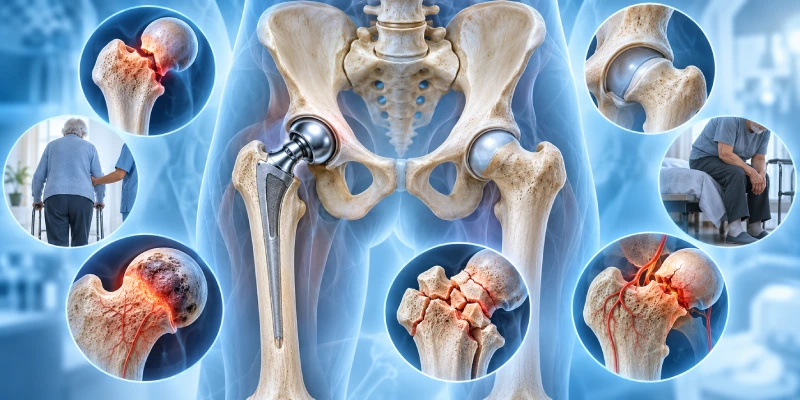
Complications if Hemi Hip Replacement Is Not Done?
Avascular necrosis and femoral head collapse
Chronic hip pain and disability
Leg shortening and deformity
Nonunion of the fracture
Deep vein thrombosis (DVT)
Pulmonary embolism (PE)
Pressure ulcers from prolonged immobility
Pneumonia and urinary tract infections
Loss of mobility and independence
Increased mortality risk in frail or elderly patients
Reduced hip movement
Muscle weakness and deconditioning
Increased dependence on mobility support
Difficulty returning to everyday activities
Diagnostic Tests Before Hemi Hip Replacement
Clinical Examination
- Physical examination
- Hip range-of-motion assessment
- Neurovascular assessment
Imaging Tests
- X-ray
- CT scan
- MRI
- Evaluation of fracture displacement and location
Blood Tests
- Complete Blood Count (CBC)
- Blood clotting tests
- Kidney function tests
- Liver function tests
- Blood sugar test
Pre-Surgery Fitness Tests
- Electrocardiogram (ECG/EKG)
- Chest X-ray
- Urine examination
- Pre-operative medical evaluation
- Assessment of overall surgical fitness
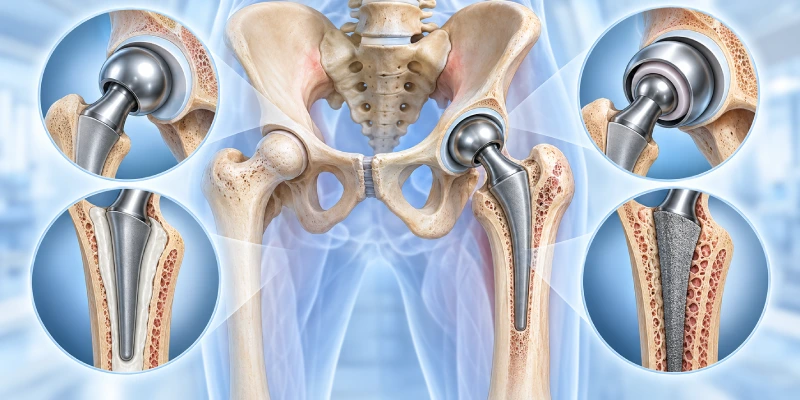
Types of Hemi (Partial) Hip Replacement Surgery
Unipolar Hemiarthroplasty
A single artificial femoral head replaces the damaged head and moves within the natural socket.
Bipolar Hemiarthroplasty
The artificial femoral head includes an additional bearing mechanism allowing movement within the implant.
Cemented Hemiarthroplasty
Bone cement secures the femoral component inside the prepared femoral canal.
Uncemented (Press-Fit) Hemiarthroplasty
The femoral component achieves fixation within bone without using bone cement.
Quick View Of Surgical Options
| Type | What It Involves | Who It May Suit |
|---|---|---|
| Unipolar | Single artificial femoral head moves in the natural socket. | Selected patients with a healthy acetabulum. |
| Bipolar | Artificial head has an additional internal bearing. | Selected patients needing hemiarthroplasty. |
| Cemented | Bone cement fixes the femoral component. | Patients needing immediate fixation. |
| Uncemented (Press-Fit) | Component fixes directly within the bone. | Patients with suitable bone quality. |
Step-by-Step Procedure of Hemi Hip Replacement Surgery
-
Step 1: Preparation and Anaesthesia
Anaesthesia is administered, the patient is positioned, and the hip area is sterilised.
-
Step 2: Surgical Approach and Exposure
The surgeon makes an incision, exposes the joint, and carefully opens the capsule.
-
Step 3: Removal of the Damaged Femoral Head
The damaged femoral head is removed after preparing and cutting the femoral neck.
-
Step 4: Preparation of the Femoral Canal
The surgeon opens and shapes the femoral canal to accommodate the prosthetic stem.
-
Step 5: Implant Insertion and Fixation
The prosthetic stem is inserted, secured, and fitted with the artificial head.
-
Step 6: Reduction and Closure
The surgeon positions the new hip, checks stability, and closes the surgical wound.
Risks & Safety Measures to Follow After Hemi Hip Replacement Surgery
Risks
- Dislocation
- Blood clots
- Infection
- Leg length discrepancy
- Increasing hip pain
- Wound problems
- Numbness or weakness
- Implant loosening or failure
- Acetabular cartilage deterioration
- Persistent difficulty walking
Safety Tips
- Avoid hip bending beyond 90°
- Do not cross your legs
- Avoid excessive hip twisting
- Follow recommended sleeping positions
- Use adapted equipment when needed
- Use walking aids correctly
- Follow weight-bearing restrictions
- Keep the surgical wound clean
- Take prescribed medicines correctly
- Attend follow-ups and complete physiotherapy
Recovery Timeline After Hemi Hip Replacement Surgery
-
Days 1–3: Immediate Phase
Early movement begins with pain control, short assisted walks, and monitoring before discharge.
-
Weeks 1–4: Early Healing & Independence
Walking aids, wound care, and hip precautions support safe recovery and gradual independence.
-
Weeks 6–12: Restoring Strength
Strengthening, balance exercises, and improving stamina help patients progress toward independent movement.
-
Months 3–6 and Beyond
Low-impact activities gradually expand as strength, mobility, and joint stability continue to improve.
From Pain to Progress: Real Success Stories
What Factors Determine Pricing for Hemi Hip Replacement
- Implant type and material
- Hospital tier and infrastructure
- Surgeon expertise
- Pre-operative evaluations
- Hospital stay and complications
- Rehabilitation and physical therapy
- Type and severity of the fracture
- Hemiarthroplasty technique required
- Additional treatment for other medical conditions
Non-Surgical vs Surgical Hemi Hip Replacement: Cost Factors
| Cost Factor | Non-Surgical Treatment | Surgical Hemiarthroplasty |
|---|---|---|
| Initial Costs | Consultation, medicines, investigations | Pre-operative evaluation, procedure, implant |
| Hospital Stay | Usually limited to consultations and follow-ups | Hospitalisation, nursing, operating-room care |
| Rehabilitation | Physiotherapy and mobility support | Post-operative physiotherapy and rehabilitation |
| Long-Term Costs | Medicines, assistive devices, follow-up care | Follow-up care, medicines, assistive devices, complications |
Frequently Asked Questions
What is the average lifespan after a hip replacement?
Typical lifespan ranges from 20 to 25 years or more, with about 80% to 90% remaining functional for 15 to 20 years after surgery.
What is the best age to have a hip replacement?
There is no single best age; timing depends on pain, overall health, and quality of life. Most procedures occur between 60 and 80 years old, generally.
How many days of bed rest after hip replacement surgery?
No bed rest is usually required; patients are typically helped out of bed to stand and walk the same day with a walker or crutches.
When can one sit on a normal sofa after hip replacement?
You can typically sit on a normal sofa after 6 to 12 weeks, once precautions end and your doctor or physical therapist gives clearance for comfortable sitting.
How long after hip replacement is there a risk of dislocation?
The highest risk of dislocation occurs within the first one to three months, while surrounding soft tissues are still healing and regaining stability around the new joint.
Can you sit Indian style after hip replacement?
Yes, you can usually sit cross-legged, or Indian style, once your body heals and your doctor approves, as long as you avoid excessive bending during early recovery.
What is the 90 rule for hip replacement?
The 90-degree rule advises patients not to bend their hip past a right angle during early recovery, helping protect the joint and prevent unwanted dislocation.
What are the most common indications for a hemiarthroplasty?
The procedure is primarily indicated for elderly or medically frail patients with displaced femoral neck fractures where the natural socket remains healthy and suitable for preservation.
What are the permanent restrictions after a hip replacement?
Most patients have no specific permanent movement restrictions once fully healed, though doctors generally advise avoiding high-impact activities to reduce stress and excessive implant wear.
Can a hemi hip replacement cause problems years later?
Yes, hemiarthroplasty can cause problems years after initial surgery. Over time, this can lead to complications causing pain, stiffness, or reduced mobility.