
Sports Injury Doctor in Jamshedpur
Home / Treatments / Sports & Arthroscopy / Sports Injury
Top orthopaedist for meniscus tear, ankle sprain, shoulder dislocation
12,000+ patients treated across orthopaedic care
14+ years of orthopaedic surgical experience
MS Orthopaedic, Gold Medalist
Fellowship in Arthroscopy and Sports Surgery
- Red Cross Bhawan, Pipe Line Road, near Old Court Road, Ambagan, Sakchi, Jamshedpur, Jharkhand 831001
Orthopaedic Treatments
What Is a Sports Injury?
Any kind of damage to body tissue, bones, or the musculoskeletal system that happens during sports, exercise, or physical activity.
Key Points To Know
| Factor | Details |
|---|---|
| Prevalence | Affects young athletes and active populations in India. |
| Acute Injuries | Develop suddenly after falls, collisions, twists or forceful movements. |
| Overuse Injuries | Develop gradually from repeated stress without adequate recovery. |
| Common Areas | Knees, shoulders, ankles, wrists, elbows, hips and muscles. |
| Risk | Increased training, poor technique, previous injuries and inadequate conditioning. |
Get Your Facts Straight Before Treatment
Should You Continue Playing Through Sports Injury Pain?
No. Stop or modify activity when discomfort, instability, or symptoms worsen.
Can a Sports Injury Heal Without Treatment?
Yes. Minor cases may recover with rest, protection, and rehabilitation.
Is an MRI Needed For Every Sports Injury?
No. Imaging depends on examination findings and suspected structural damage.
Can You Return To Sport As Soon As Pain Improves?
No. Return to sport only after strength, flexibility, balance, and functional readiness return.
Can Previous Injuries Increase Your Risk Of Another Injury?
Yes. Incomplete recovery may leave weakness, instability, or altered movement patterns.
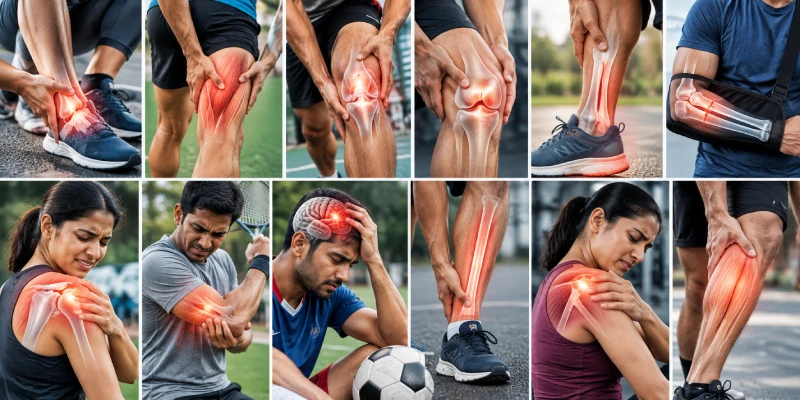
Types of Sports Injuries
Sprains
Ligament stretching or tearing, commonly affecting ankles, knees, and wrists.
Muscle Strains
Muscle or tendon overstretching or tearing during physical activity.
Ligament Injuries
ACL, MCL, and other ligament tears caused by twisting, landing, or contact.
Meniscus Injuries
Meniscus tears caused by twisting, often producing pain, swelling, or catching.
Tendon Injuries
Tendon damage from repetitive loading or sudden force during activity.
Fractures
Bone cracks or breaks caused by impact, falls, or excessive force.
Dislocations
Joint bones forced completely out of their normal anatomical position.
Overuse Injuries
Repetitive loading causing tendinopathy, stress injuries, and persistent activity-related pain.
Concussions
Brain injuries resulting from direct impacts or sudden forceful head movements.
Shin Splints
Inner shin pain commonly associated with running and repetitive impact.
Rotator Cuff Injuries
Shoulder tendon damage affecting stability, strength, and overhead arm movement.
Muscle Cramps
Sudden involuntary muscle contractions occurring during intense or prolonged physical activity.
You May Need Sports Injury Treatment if You Have
- Severe or persistent pain
- Inability to bear weight
- Visible deformity or swelling
- Joint instability or repeated giving way
- Popping, snapping, or grinding
- Rapid swelling or extensive bruising
- Persistent symptoms despite home care
- Restricted joint movement
- Significant post-injury weakness
- Difficulty returning to activities
- Reduced muscle strength
- Poor coordination or balance
- Numbness or tingling
- Joint locking or catching
- Recurrent swelling after activity
- Difficulty with sport-specific movements
- Worsening symptoms with activity
- Reduced confidence in the affected joint
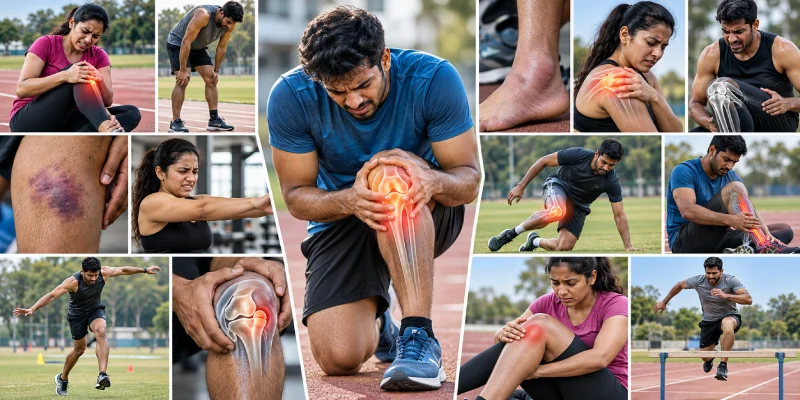
Complications if Sports Injuries Are Left Untreated?
Chronic pain and stiffness
Persistent joint instability
Post-traumatic arthritis
Progressive tendon tears or ruptures
Abnormal bone formation within muscles
Nerve compression and muscle atrophy
Compensatory injuries affecting other joints
Psychological distress and fear of reinjury
Persistent joint inflammation
Reduced endurance during physical activity
Loss of sport-specific skills
Difficulty performing routine movements
Reduced confidence during physical activity
Greater dependence on activity modification
Diagnostic Tests Before Sports Injury Treatment
Clinical and Physical Assessment
- Medical History
- Physical Examination
- Range of Motion and Strength Tests
- Specialised Orthopaedic and Stress Tests
Diagnostic Imaging Tests
- X-Rays
- Magnetic Resonance Imaging (MRI)
- Ultrasound
- CT Scan
Types of Sports Injury Treatment
Non-Surgical
- RICE Protocol
- Immobilization
- Medications
- Injections
- Physiotherapy and Rehabilitation
- Activity Modification
- Strength and Conditioning Exercises
- Gradual Return-to-Sport Programmes
Surgical
- Arthroscopy
- Ligament Reconstruction
- Tendon and Cartilage Repair
- Fracture Fixation
- Joint Stabilisation
- Meniscus Repair
- Selected Cartilage Restoration Procedures
- Tendon Repair
Sports Injury Treatment Options at a Glance
| Types | What It Involves | Who It Suits |
|---|---|---|
| Non-Surgical | RICE, medicines, immobilisation, injections, physiotherapy, and activity modification. | Mild to moderate injuries needing conservative care. |
| Rehabilitation | Strengthening, conditioning, and gradual return-to-sport programmes. | Patients progressing after initial injury management. |
| Surgical | Arthroscopy, ligament reconstruction, repairs, fracture fixation, and stabilisation. | Significant structural damage or failed conservative treatment. |
| Advanced Repair | Meniscus repair, tendon repair, and selected cartilage restoration. | Specific tissue injuries requiring surgical restoration. |
Step-by-Step Procedure of Sports Injury Treatment
-
Step 1: Intake and Medical History Review
Review injury mechanism, symptoms, sporting activity, training patterns, and previous injuries.
-
Step 2: Physical Examination and Biomechanical Assessment
Assess tenderness, movement, strength, stability, balance, and functional movement patterns.
-
Step 3: Diagnostic Imaging If Required
Use X-rays, MRI, or ultrasound to identify suspected structural damage.
-
Step 4: Diagnosis and Treatment Plan Formulation
Determine injury severity and develop an appropriate conservative, procedural, or surgical plan.
-
Step 5: Acute Clinical Interventions
Control symptoms using medication, cold therapy, bracing, splinting, or reduction when necessary.
-
Step 6: Progressive Rehabilitation and Physical Therapy
Restore mobility, strength, endurance, balance, and sport-specific function through structured rehabilitation.
Risks & Safety Measures After Sports Injury Treatment
Risks
- Recurrent injury
- Chronic pain and stiffness
- Compensatory injuries
- Permanent joint instability
- Muscle weakness
- Delayed return to sport
- Infection after surgery
- Bleeding or blood collection after surgery
- Blood clots after certain operations
- Nerve or blood-vessel injury
- Scar-related discomfort
- Incomplete symptom relief
- Further treatment may become necessary
Safety Tips
- Follow the recommended recovery timeline
- Progress activity levels gradually
- Stop activity if pain or swelling develops
- Maintain adequate hydration and nutrition
- Warm up before exercise or rehabilitation
- Follow medical clearance before high-impact activities
- Follow the prescribed rehabilitation programme
- Avoid premature return to competitive sport
- Use recommended protective equipment
- Maintain appropriate strength and conditioning
Recovery Timeline After Sports Injury Treatment
General Recovery By Injury Type
- Mild Sprains and Strains: 1–3 Weeks
- Moderate Sprains and Tendonitis: 4–12 Weeks
- Bone Fractures: 6–12 Weeks
- Shoulder Injuries: 3–6 Months
- Major Ligament Tears: 6–12+ Months
Standard Rehabilitation Timeline
| Phase | Timeline | Main Focus |
|---|---|---|
| (I) Acute Protection | Days 1–7 | Control pain and swelling while protecting the injured area and starting gentle movement. |
| (II) Mobility & Early Strength | Weeks 2–6 | Restore flexibility, joint movement, and foundational muscle activation through progressive rehabilitation exercises. |
| (III) Functional Conditioning | Weeks 6–12 | Build strength, coordination, endurance, and sport-specific movement patterns through progressively challenging exercises. |
| (IV) Return to Play | Week 12+ | Use functional testing to guide gradual return to training, competition, and full sporting activity. |
From Pain to Progress: Real Success Stories
What Factors Determine Pricing for Sports Injury Treatment?
- Injury Type & Severity
- Conservative vs Surgical Treatment
- Diagnostic & Imaging Tests
- Rehabilitation & Physiotherapy Duration
- Surgeon & Specialist Expertise
- Hospital Tier & Room Category
- Location & Healthcare System
- Injection Requirements
- Bracing & Support Devices
- Anaesthesia Requirements
- Arthroscopic Equipment (if needed)
- Follow-Up Consultations
Non-Surgical vs Surgical Sports Injury Treatment: Cost Factors
| Cost Factor | Non-Surgical | Surgical |
|---|---|---|
| Treatment | Usually lower upfront cost | Usually higher upfront cost |
| Therapy | May require multiple rehabilitation sessions | Rehabilitation is commonly required after surgery |
| Imaging | May involve X-ray, ultrasound or MRI | Pre-operative imaging may be required |
| Hospital Costs | Usually minimal | May include hospital and operating-room costs |
| Anaesthesia | Usually not required | Required for many surgical procedures |
| Equipment | Braces and rehabilitation equipment may be used | May require specialised surgical equipment |
| Doctor’s Fees | Consultation and treatment fees | Surgeon and procedure-related fees |
| Recovery | Costs may increase with prolonged rehabilitation | Includes post-operative rehabilitation and follow-up |
Frequently Asked Questions
Is “No Pain, No Gain” True for Sports Injuries?
Not always. Muscle fatigue differs from sharp or persistent discomfort, which may indicate tissue damage requiring assessment and appropriate management.
Can Only Professional Athletes Get Serious Sports Injuries?
No. Recreational players, weekend athletes, runners, and fitness enthusiasts can experience significant ligament, tendon, muscle, or bone damage.
Does Movement Rule Out a Fracture?
No. Some cracks and stress injuries still allow walking or movement. Persistent tenderness, swelling, or discomfort may warrant imaging and clinical evaluation.
Are Non-Contact Sports Completely Safe From Injuries?
No. Repetitive movements, poor technique, sudden increases in training, and overuse can affect tendons, muscles, joints, and supporting structures during recreational activities.
Should You Apply Heat Immediately After a Sports Injury?
Usually not. Early cold therapy may help control swelling and discomfort, while heat can increase local circulation during the initial inflammatory period.
Are Ankle Sprains Minor Injuries?
Not always. Significant ligament damage can cause instability and recurrent twisting, particularly when rehabilitation, strengthening, and balance training are inadequate.
Does Reduced Swelling Mean an Injury Has Healed?
No. Internal tissues may remain vulnerable after visible swelling settles. Strength, flexibility, stability, and function should return progressively before you resume unrestricted activity.
Can Dehydration Increase Your Sports Injury Risk?
Yes. Fluid loss can contribute to fatigue, reducing muscular shock absorption and coordination. Adequate hydration supports physical performance, movement control, and tissue function.
Does Every Major Ligament Tear Require Surgery?
No. Management depends on tear severity, joint stability, activity demands, associated damage, and response to structured rehabilitation. Some cases can improve without surgery.
Does an ACL Tear End an Athlete’s Sporting Career?
No. Appropriate reconstruction when indicated, followed by progressive rehabilitation, strength training, functional testing, and gradual sporting progression can support successful athletic participation.